Intel AF82801IBMSLB8Q: A Deep Dive into the I/O Controller Hub's Architecture and Functionality
The intricate ecosystem of a modern computing platform relies on a delicate division of labor between its core components. While the CPU is the undisputed brain, the I/O Controller Hub (ICH) acts as the central nervous system, managing the vast majority of data flow between the processor, memory, and peripheral devices. The Intel AF82801IBMSLB8Q is a specific implementation of this critical component, representing a mature and widely deployed ICH chip within the industry.
Architectural Foundation: The Hub-Based Revolution
This chip is part of Intel's 8 Series chipset family, designed to partner with processors from the 4th Gen Intel Core (Haswell) era. It marked the final evolution of the classic two-chip "northbridge/southbridge" architecture before a more radical integration into System-on-a-Chip (SoC) designs. The AF82801IBMSLB8Q, as the southbridge (now termed Platform Controller Hub or PCH in later generations), connects to the CPU via the Direct Media Interface (DMI), a high-speed, bidirectional point-to-point link. This architecture offloads all I/O functions from the CPU, allowing it to focus on computational tasks while the ICH efficiently handles communication with a diverse array of slower-speed peripherals.
Core Functional Blocks and Connectivity
The functionality of the AF82801IBMSLB8Q is best understood by examining its integrated controllers. Its primary role is to aggregate data traffic from numerous interfaces and funnel it to the CPU and system memory. Key functional blocks include:
Storage Interfaces: It provides native support for SATA 3.0 (6 Gb/s) ports, enabling high-speed connectivity for hard drives and solid-state drives. This includes support for RAID configurations for enhanced data performance and redundancy.
USB Connectivity: The hub integrates multiple USB 2.0 controllers, supporting a large number of ports for connecting everything from keyboards and mice to external storage. This extensive USB support was crucial for the era's expanding universe of peripherals.
PCI Express Lanes: It offers a configurable number of PCIe 2.0 lanes. These lanes provide connectivity for additional controllers, such as gigabit Ethernet, Wi-Fi cards, sound cards, and other expansion cards that do not require the ultra-high bandwidth of the CPU's direct PCIe lanes.
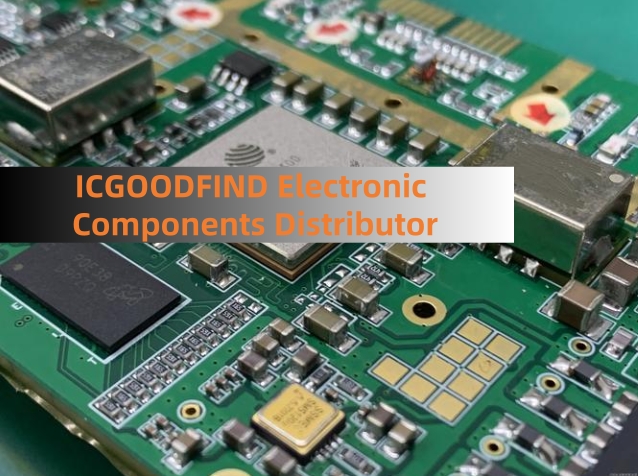
Legacy and System Support: Faithfully, it continues to support legacy interfaces like PCI bus and LPC (Low Pin Count) bus, which is used to connect the BIOS/UEFI firmware chip (SPI) and the trusted platform module (TPM). It also incorporates a high-definition audio controller, system management functions, and power management logic, making it a true "all-in-one" I/O solution.
The Role of Firmware and the LPC Bus
A less visible but utterly critical function of the ICH is its management of system firmware. Through the LPC (Low Pin Count) bus, the AF82801IBMSLB8Q provides the essential pathway to the SPI flash memory chip that houses the BIOS/UEFI firmware. This bus is responsible for the initial handshake and code execution that occurs when the system is powered on, long before the main operating system loads. The ICH's reliability is, therefore, paramount to the very bootability of the platform.
Conclusion: ICGOOODFIND
The Intel AF82801IBMSLB8Q exemplifies a pinnacle of the discrete southbridge design. Its architecture, built around aggregating vast I/O traffic and serving as the central connectivity nexus for an entire platform, ensured robust and reliable performance for a generation of computing devices. It highlights a key era in PC development where modularity and expandability were central design tenets, effectively managing the transition from legacy interfaces to modern high-speed serial links like SATA and USB.
Keywords:
1. I/O Controller Hub (ICH)
2. Platform Controller Hub (PCH)
3. Direct Media Interface (DMI)
4. SATA 3.0
5. LPC Bus

